
Benchtop centrifuges separate solids and liquids across clinical, research, food, environmental, and industrial labs. They spin blood for serum and plasma, pellet cells and microbes Benchtop centrifuge, clarify proteins and nucleic acids, and concentrate particulates from water, soil, or food. Rotor choice, speed, capacity, and temperature control tailor performance for throughput and biosafety. Compact units support point‑of‑care and onsite testing, while programmable features improve reproducibility and workflow — continue for specifics on selection, rotors, and maintenance.
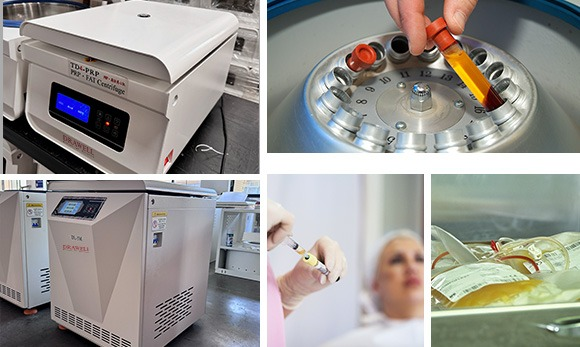
How to Pick the Right Benchtop Centrifuge: Speed, Rotors, Capacity
Choosing the right benchtop centrifuge requires matching instrument specifications to experimental needs. The evaluator considers maximum speed (RPM or RCF) to guarantee separation efficiency for particulates, cells, or phase layers.
Rotor type—fixed-angle, swing-bucket https://laballiance.com.my/, or specialized microplate—determines sample orientation and throughput; interchangeability supports varied workflows.
Capacity, measured by tube size and rotor slots, balances batch volume against footprint and power. Programmability and safety features provide operational freedom without compromising containment.
Noise, maintenance, and cooling options influence placement and use patterns. Compatibility with existing consumables and future applications prevents constraints.
Cost is weighed against long-term flexibility rather than immediate savings, enabling users to select an instrument that liberates rather than limits laboratory practice.
Benchtop Centrifuges for Clinical & Diagnostic Labs (Blood & Sample Prep)
When processing blood and clinical specimens, benchtop centrifuges must deliver reproducible separation, biosafety, and workflow efficiency within constrained laboratory spaces.
Clinical-grade units prioritize platelet-rich plasma, serum/plasma separation, and urine sediment preparation with rapid, consistent g-forces and swing-bucket or fixed-angle rotors suited to common tube sizes.
Sealed rotors, splash-resistant lids, and easy-to-decontaminate surfaces reduce biohazard risk while programmable protocols and quick-run cycles support high throughput demands.
Compact footprints, low noise, and intuitive controls enable flexible placement in decentralized labs or point-of-care settings.
Maintenance simplicity, routine calibration, and documented performance verification help meet regulatory expectations without burdening staff.
Selection focuses on proven reliability, operator safety, and the freedom to integrate equipment into varied clinical workflows.
Benchtop Centrifuges for Research & Pharma (Cells, Protein & RNA Prep)
Benchtop centrifuges for research and pharmaceutical laboratories must balance high performance with versatility to support cell culture, protein purification, and RNA/DNA workflows. These instruments enable gentle pelleting of cells, efficient separation of lysates, and clear phase separation for nucleic acid extraction.
Researchers value adjustable speed, temperature control, and rotor options that accommodate microtubes, PCR strips, and swing-buckets without constraining protocol choice. Features like quick-change rotors, programmable runs, and reliable biohazard containment streamline iterative experiments while preserving sample integrity.
In drug discovery and assay development, reproducible g-force delivery and low-vibration operation reduce variability. Compact footprints and intuitive controls free bench space and user time, empowering teams to adapt workflows rapidly and pursue novel approaches with confidence.
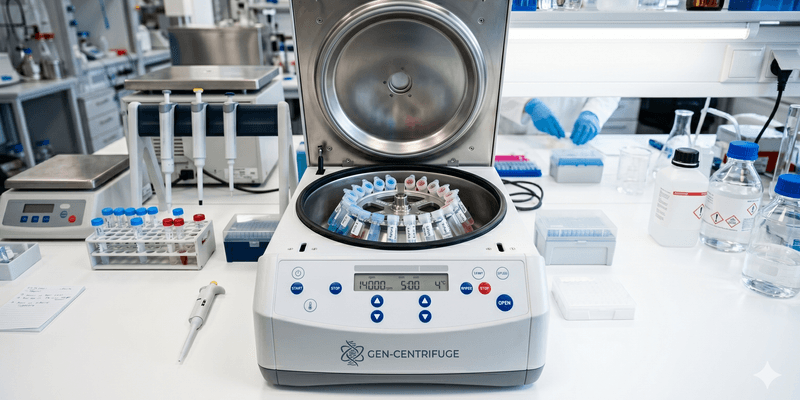
Benchtop Centrifuges for Food, Environmental & Industrial Testing
Laboratories focused on food safety, environmental monitoring, and industrial quality control rely on compact centrifuges to separate particulates, clarify liquids, and concentrate analytes for downstream assays. In food testing, benchtop units enable rapid sedimentation of fats, proteins, and microbes from samples, facilitating allergen screens, pathogen assays, and shelf‑life studies.
Environmental labs use them to concentrate suspended solids, algae, or trace contaminants from water and soil extracts, improving detection limits for pollutants and biomarkers.
Industrial testing applies centrifugation to assess process streams, clarify lubricants, and prepare samples for particle size or compositional analysis.
Portable, user‑configurable centrifuges support decentralized workflows, allowing technicians to work efficiently onsite or in small labs while maintaining analytical rigor and timely decision making.
Benchtop Maintenance, Biosafety & Common Rotor Choices
How should routine maintenance and biosafety practices be integrated with rotor selection to guarantee reliable, safe centrifuge operation? A disciplined approach preserves autonomy and lab uptime: scheduled inspections, cleaning with compatible disinfectants, and verification of imbalance detection systems.
Rotor choice must match sample type, biosafety level, and desired g-force to minimize aerosol risks and wear.
- Select rotors rated for intended rpm/g and compatible with containment accessories to reduce spill and aerosol hazards.
- Implement routine torque checks, bearing inspections, and replacement intervals to prevent catastrophic failure and downtime.
- Adopt biosafety protocols: sealed tubes, certified rotors, proper PPE, and decontamination logs to protect personnel and samples.
- Train staff on rotor selection, load balancing, and emergency procedures to maintain freedom of operation.
Conclusion
Choosing the right benchtop centrifuge hinges on matching speed, rotor type and capacity to specific laboratory tasks. Clinical, research, pharmaceutical, food, environmental and industrial settings each demand tailored features—safety, contamination control and ease of maintenance remain universal priorities. Regular upkeep and appropriate biosafety practices prolong instrument life and protect users. Thoughtful selection and routine care guarantee reliable sample processing, reproducible results and cost-effective operation across diverse applications.